
How to Care for Fine Art Prints
A Fine Art Print Is Built To Last
A fine art photograph produced to archival standards is not a disposable object. With proper care, it will retain its colour, detail, and emotional impact for decades — potentially outlasting the furniture around it. But even the highest-quality print is vulnerable to a handful of environmental factors that are easy to manage once you know what to look for.
This guide covers everything you need to know to protect your investment, whether you have just purchased your first print or are building a considered collection.
The Four Enemies of Fine Art Prints
Most print damage comes from four sources: light, humidity, temperature fluctuation, and physical handling. Understanding each one is the foundation of good print care.
1. Light — Especially UV
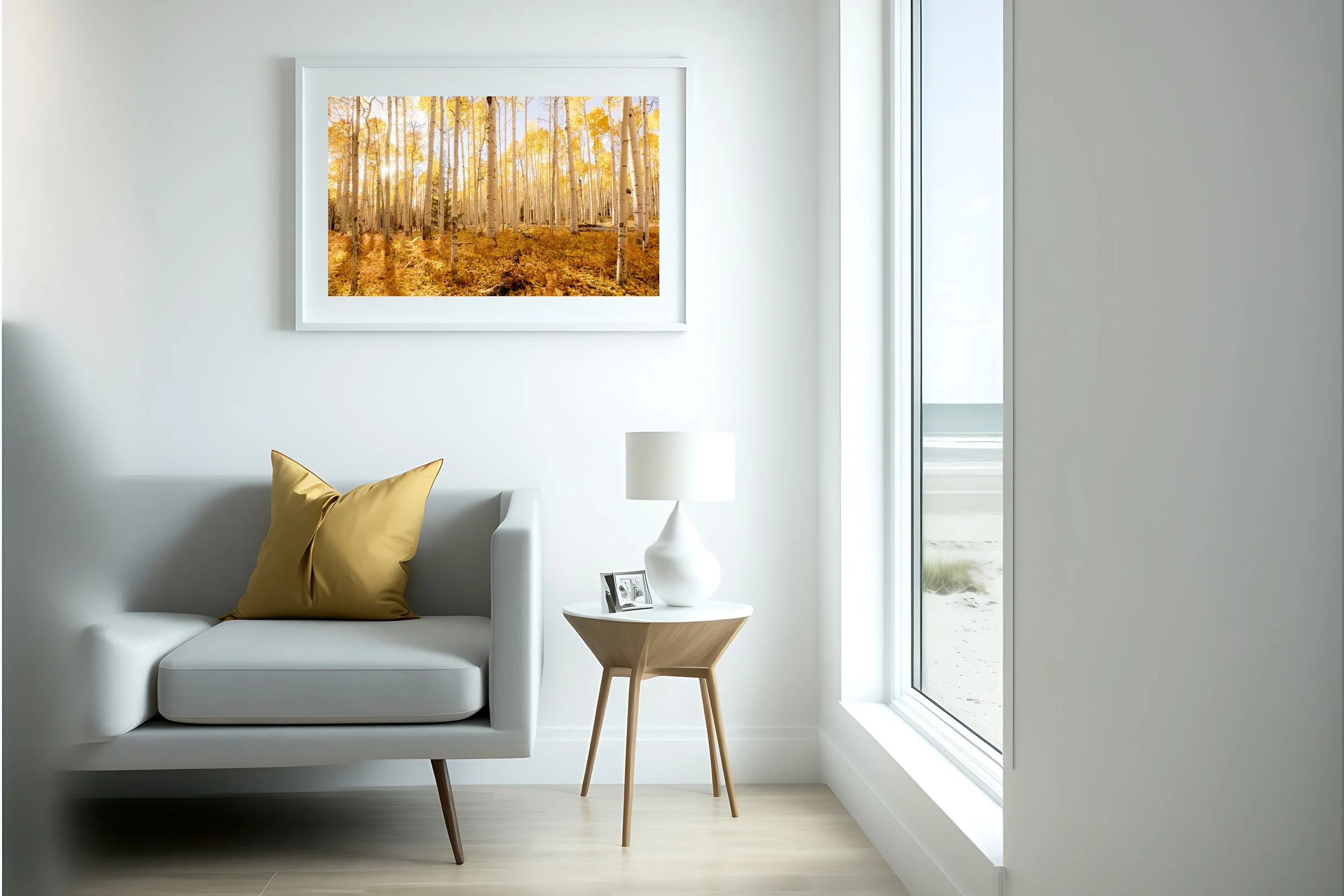
Ultraviolet light is the primary cause of colour fading in photographic prints. This applies to both natural daylight and certain artificial light sources, including fluorescent tubes and some LED fittings.
To protect your prints:
Avoid hanging art in direct sunlight or in rooms with unfiltered south-facing windows.
If your space receives strong natural light, position prints on walls that receive indirect light only.
When framing, specify UV-filtering (museum-grade) glass or acrylic. This alone can extend the life of a print significantly.
Use warm-toned LED lighting for picture lights and spotlights — these emit minimal UV compared to older light sources.
Our Landscape Fine Art Wall Art prints are produced on archival media, but UV protection at the framing stage is still the single most impactful step you can take.
2. Humidity
High or fluctuating humidity causes paper to expand and contract, leading to cockling (waviness), mould growth, and, over time, structural damage to both the print and the frame. The ideal relative humidity for fine art storage and display is between 40% and 55%.
Practical steps:
Avoid hanging prints in bathrooms, kitchens, or any room prone to condensation.
In older properties with damp walls, use a slim spacer between the frame backing and the wall to allow air circulation.
If you live in a particularly humid climate, a room dehumidifier in spaces where you display art is a worthwhile investment.
3. Temperature Fluctuation
Consistent temperature matters more than the specific temperature itself. Rooms that heat up significantly during the day and cool sharply at night — conservatories, rooms above garages, or spaces with large single-glazed windows — create stress on both the print substrate and the frame materials.
Aim for a stable environment between 16°C and 24°C. Living rooms and bedrooms in well-insulated homes are typically ideal.
4. Physical Handling
Oils and moisture from skin can permanently mark a photographic print. If you ever need to handle an unframed print:
Always use clean cotton gloves.
Support the print from beneath rather than gripping the edges.
Never stack unframed prints face-to-face without acid-free interleaving tissue between them.
Framing: The First Line of Defence
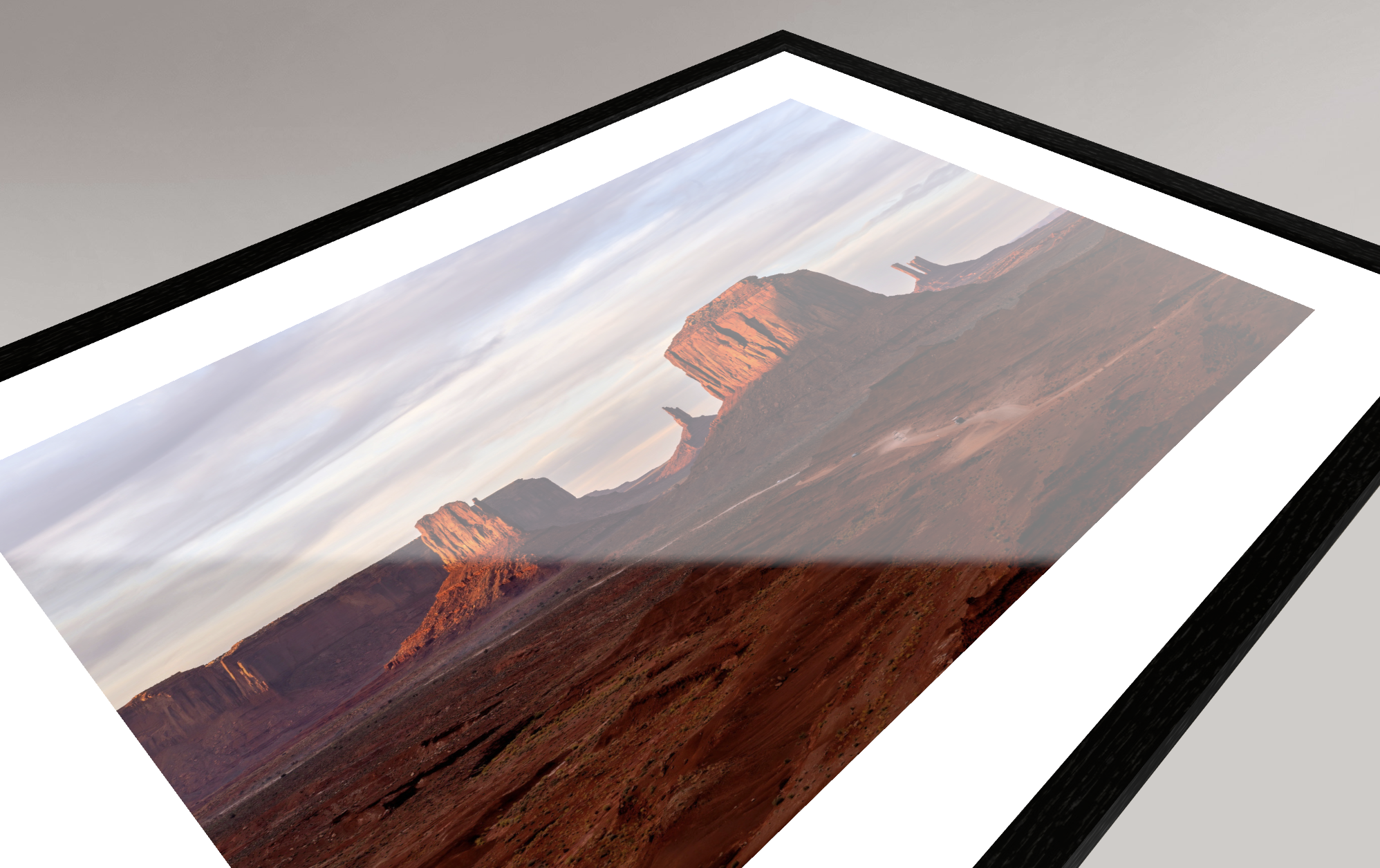
A quality frame does far more than display a print — it creates a controlled microenvironment that protects against all four of the threats above. When framing your prints, look for:
Acid-free mount board — standard mount board is acidic and will yellow and damage the print over time. Specify conservation or museum-grade board.
UV-filtering glazing — museum glass or conservation acrylic (such as Tru Vue Optium) offers the best combination of UV protection and optical clarity.
Sealed backing — a sealed frame back prevents dust, insects, and moisture from entering the frame package.
Spacers or a deep mount — keeping the print surface away from the glazing prevents condensation from forming directly on the print.
Our Floral Fine Art Wall Art and Wildlife Fine Art Wall Art prints are supplied ready to frame, and we are happy to advise on framing options that suit both the image and your interior.
Cleaning Framed Prints
Once framed, your print requires very little maintenance. To clean the glazing:
Use a soft, lint-free microfibre cloth — never paper towels, which can scratch acrylic glazing.
Apply any cleaning fluid to the cloth, not directly to the glass, to prevent liquid seeping into the frame.
Clean the frame itself with a dry or very lightly dampened cloth appropriate to the frame material.
Never spray cleaning products near an unglazed print.
Long-Term Storage
If you ever need to store a print — during a move, a renovation, or while rotating your collection — follow these guidelines:
Store prints flat, never rolled, unless they were originally supplied rolled and are being stored in their original tube.
Place acid-free tissue between each print if stacking.
Store in a cool, dry, dark environment — a wardrobe in a climate-controlled room is ideal.
Avoid attics, basements, and garages, which are prone to temperature and humidity extremes.
A Note on Archival Standards
At Perfect Captures Fine Art, every print is produced using archival inks and substrates rated for longevity under display conditions. This means that with the care described above, your print is designed to remain vibrant and stable for 70 years or more — a genuine heirloom rather than a decorative item with a limited lifespan.
Explore Our Collections
Browse our fine art photography collections, each produced to the same exacting archival standards:
Landscape Fine Art Wall Art — sweeping natural vistas for statement walls
Floral Fine Art Wall Art — intimate botanical studies for living spaces and bedrooms
Wildlife Fine Art Wall Art — striking wildlife portraits for collectors and nature lovers
If you have any questions about caring for a specific print or need advice before purchasing, please get in touch — we are always happy to help.
