
How to Choose the Right Wall Art Size for Any Room
Why Size Is Everything in Wall Art
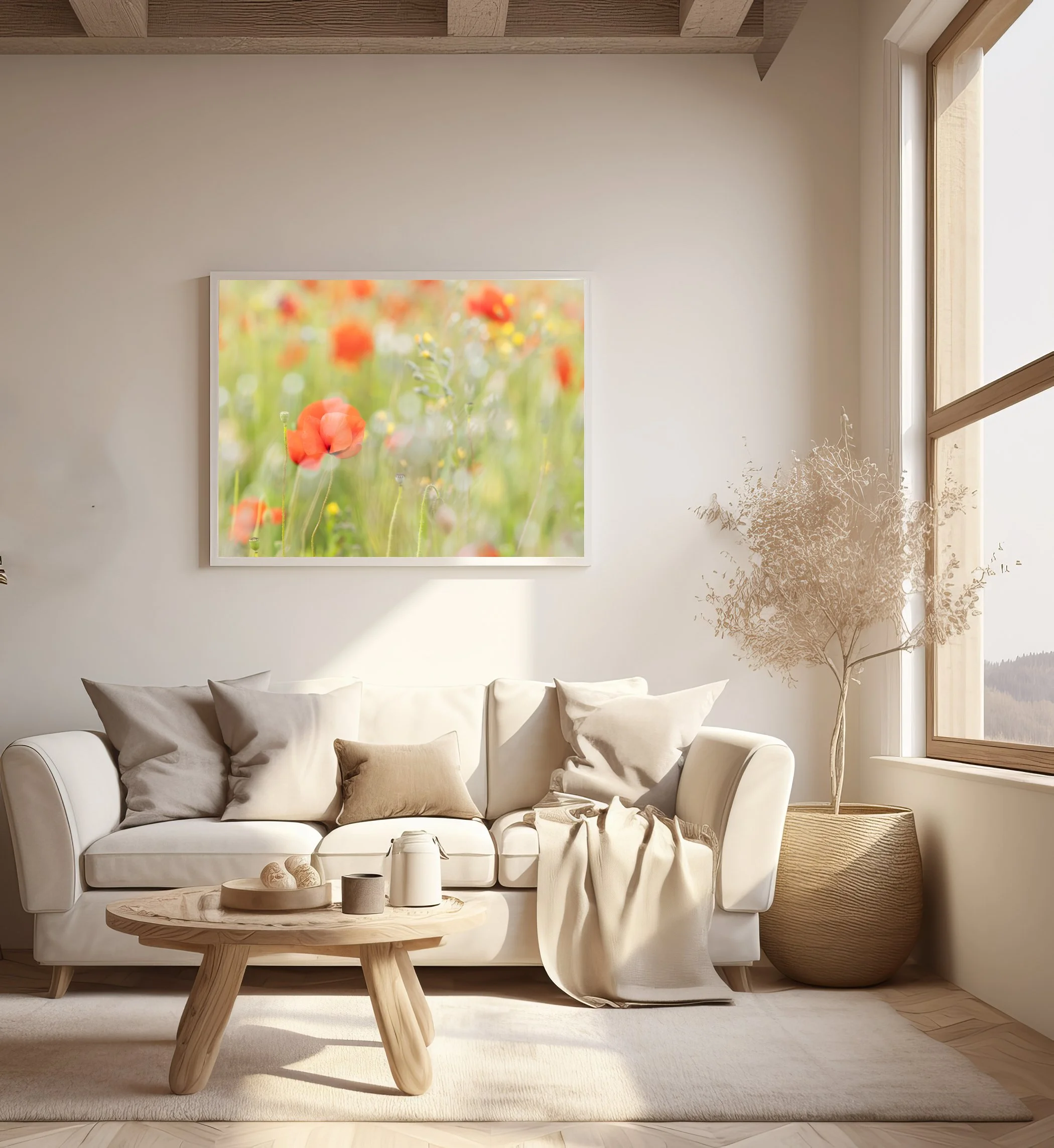
Choosing a fine art print is an investment — not just financially, but emotionally. The right piece transforms a room; the wrong size can make even the most beautiful photograph feel out of place. Before you fall in love with an image, it pays to understand the principles of scale, proportion, and placement.
Start With the Wall, Not the Print
The most common mistake buyers make is choosing a print first and then trying to fit it to the wall. Instead, begin by measuring your wall space. As a general rule, your artwork should occupy between 57% and 75% of the available wall width — enough to anchor the space without overwhelming it.
For a sofa or bed, aim for a piece that spans roughly two-thirds of the furniture's width. This creates a visual relationship between the art and the furniture beneath it, grounding the composition.
Room-by-Room Guidance
Living Rooms
Living rooms are the natural home for statement pieces. A large-format landscape print — 60×40 inches or larger — commands attention above a fireplace or on a feature wall. Our Landscape Fine Art Wall Art collection includes sweeping panoramas and intimate nature studies suited to generous wall spaces.
Bedrooms
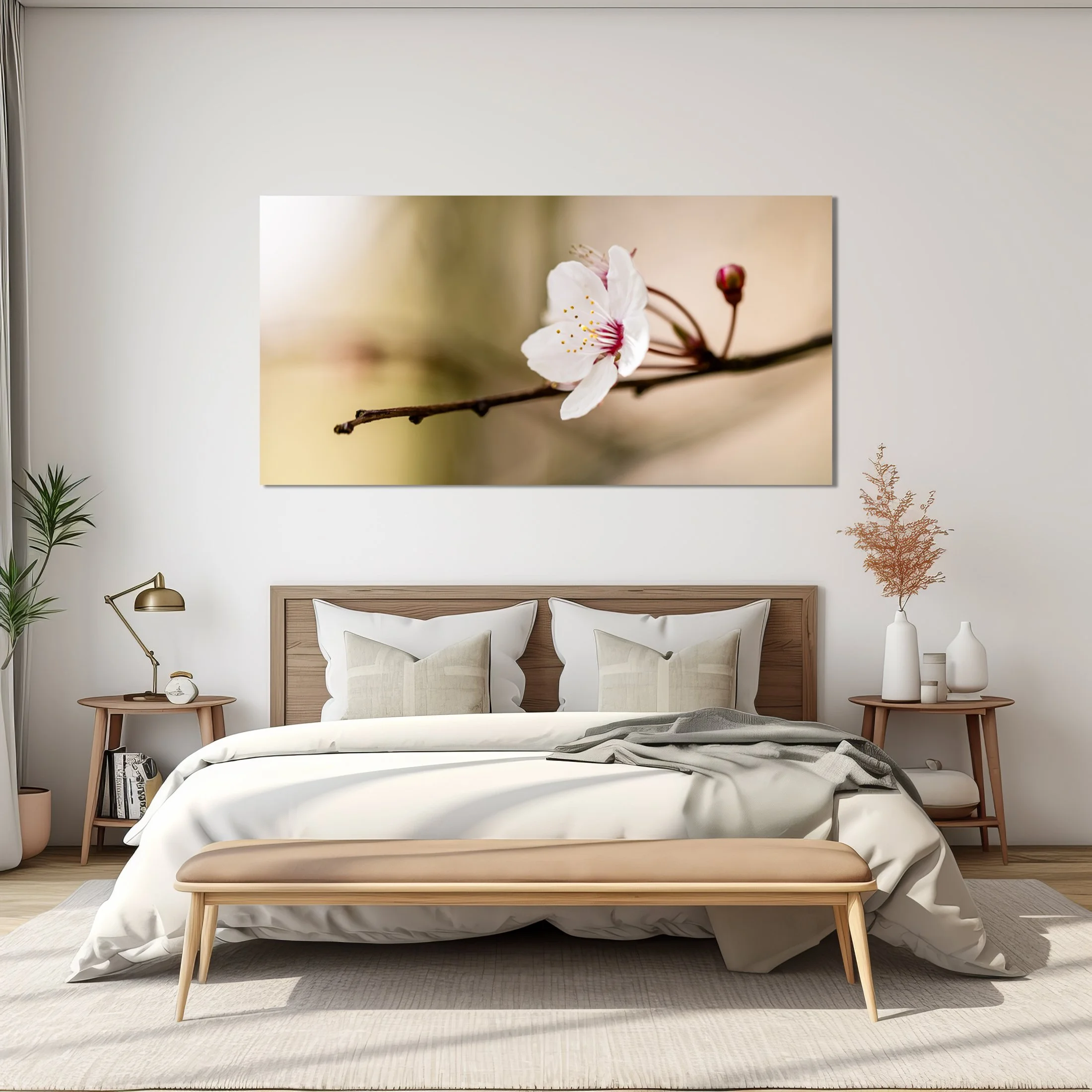
Bedrooms call for something more considered. A medium-format print (24×36 inches) above the headboard creates a focal point without dominating the room. Soft florals and botanical studies work beautifully here — explore our Floral Fine Art Wall Art collection for pieces that bring warmth and calm to a sleeping space.
Hallways and Entryways
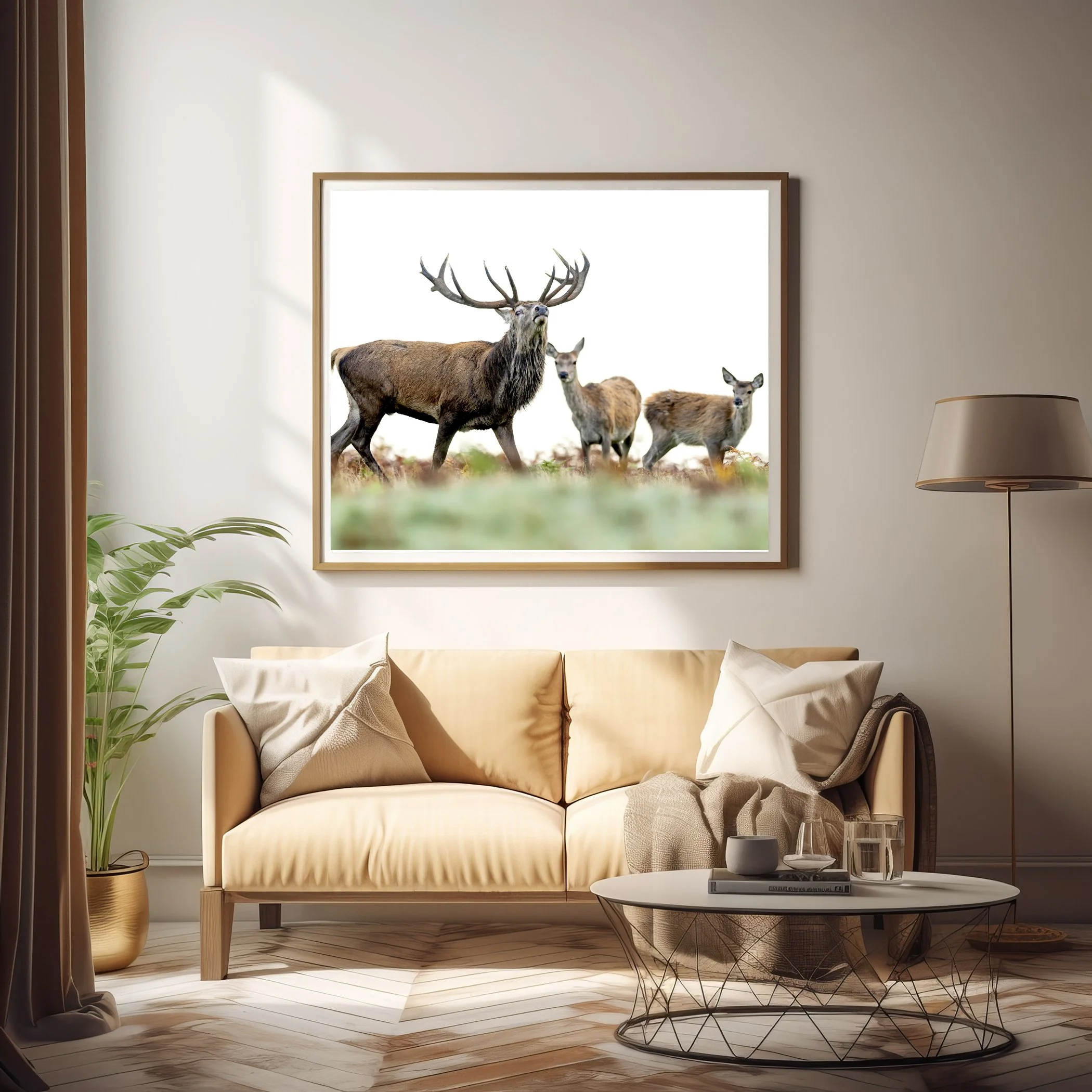
Narrow spaces reward vertical formats and gallery arrangements. A curated set of three prints in matching frames — each 12×18 inches — creates rhythm and draws the eye through the space. Wildlife portraits work especially well in this context; browse our Wildlife Fine Art Wall Art collection for striking close-up studies.
Home Offices
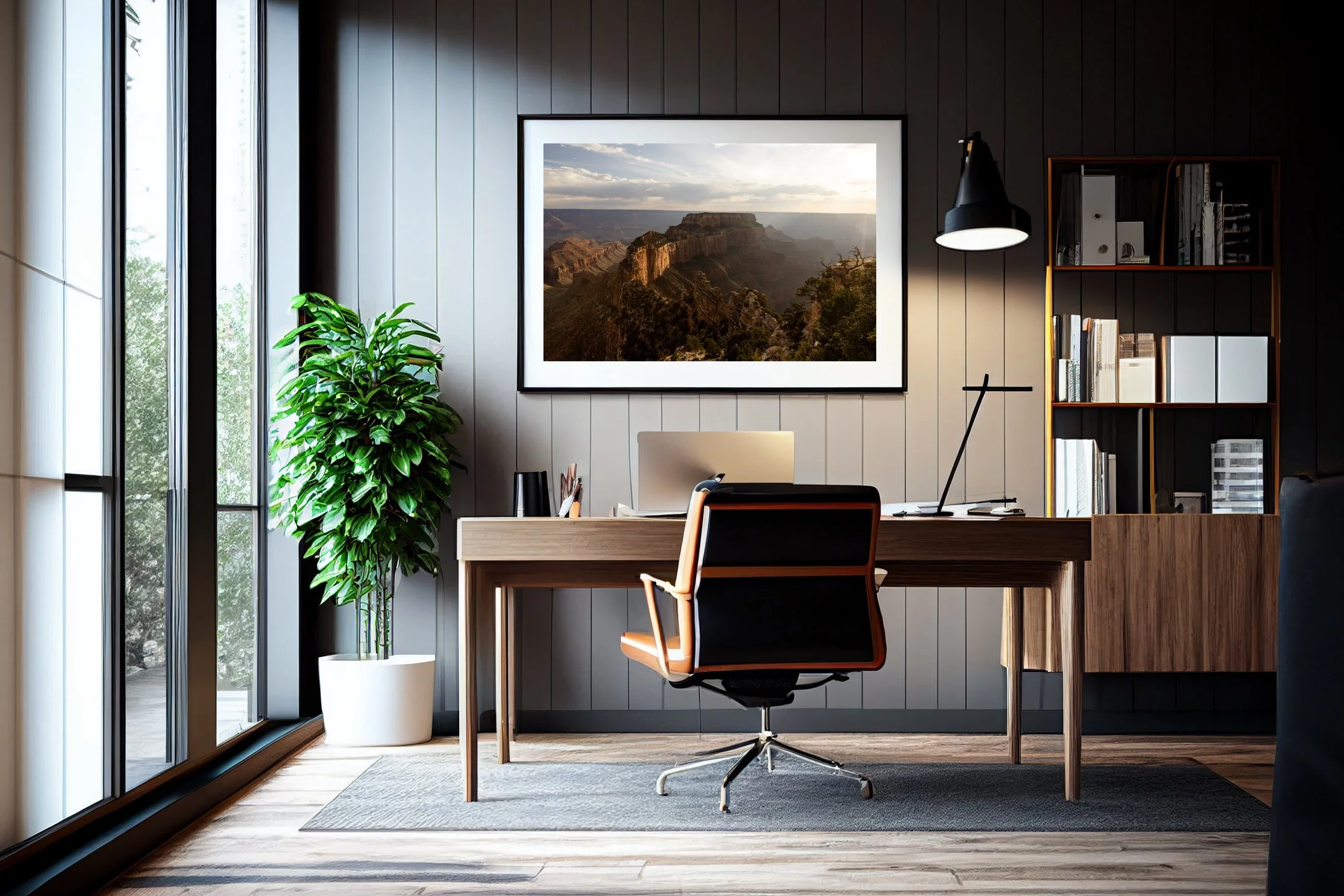
In a workspace, art should inspire without distracting. A single medium-format print positioned at eye level beside your desk — rather than directly behind your monitor — adds personality while keeping the focus on your work.
The Eye-Level Rule
Gallery curators hang art so that the centre of the piece sits at approximately 57–60 inches from the floor — average human eye level. This applies whether you are hanging a single statement piece or arranging a gallery wall. When in doubt, err on the side of slightly lower rather than higher; art that feels too high creates a disconnected, floating effect.
Gallery Walls: Making Small Prints Work Together
If you love multiple images but have limited wall space, a gallery arrangement lets you combine prints into a cohesive whole. Lay your frames out on the floor first, photograph the arrangement, and use that as your guide when hanging. Keep consistent spacing — 2 to 3 inches between frames — and anchor the arrangement with your largest or most visually dominant piece at the centre.
A Note on Framing
The frame and mount (mat) add visual weight and breathing room to a print. A wide white mount can add 4–6 inches to the perceived size of a piece, which is worth factoring into your measurements before ordering. At Perfect Captures Fine Art, each print is produced to archival standards, giving you the flexibility to frame to your own taste and interior.

Ready to Find Your Perfect Print?
Browse our curated collections to find a piece scaled to your space:
Landscape Fine Art Wall Art — sweeping vistas for generous walls
Floral Fine Art Wall Art — intimate botanicals for bedrooms and living spaces
Wildlife Fine Art Wall Art — striking wildlife for hallways and feature walls
If you are unsure which size is right for your space, we are happy to advise — simply get in touch
